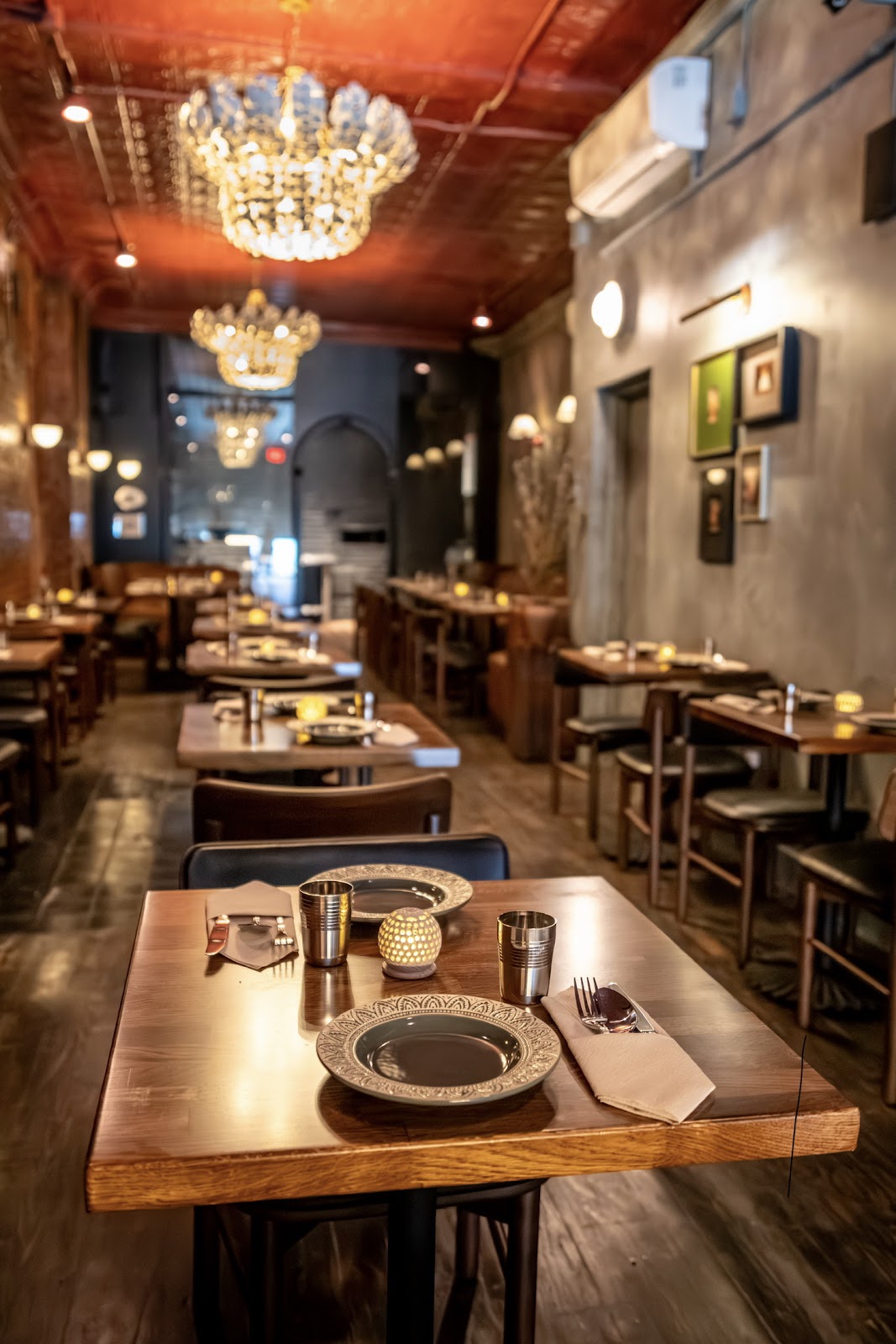
When Aarthi Sampath opened Drāvida on May 21 in Manhattan's East Village, she wasn't building a concept restaurant. She was opening a home—one designed for the millions of New Yorkers whose food has been sidelined, underrepresented, and too often treated as exotic rather than essential. After 13 years working in New York kitchens, from Junoon to The Breslin to the Rainbow Room, Sampath knows what the city demands: directness, rigor, and nothing less than total honesty. Drāvida delivers all three.
What makes this restaurant matter now isn't novelty for its own sake. It's that no one has done this before—built a restaurant that treats South Asian diaspora cuisine as a unified, coherent tradition worthy of serious attention. The menu moves between Trinidad doubles and Sri Lankan curry ramen, between Indonesian shrimp and idli and Guyanese oxtail bunny chow, connecting threads that colonial history and migration patterns have woven through New York's neighborhoods. These aren't fusion dishes playing dress-up in unfamiliar traditions. They're food born from real communities navigating real kitchens, decades in the making.
The space itself—two floors in a restored 100-year-old East Village building, complete with original brick ovens and a downstairs speakeasy called Jam and Jaggery—feels earned rather than engineered. This is a restaurant that understands New York's particular exhaustion with precious, Instagram-ready aesthetics. Instead, there's the weight of history, the integrity of restoration, the sense that something permanent is happening here. When Sampath says, "I want people to walk in and feel like they belong here—to feel at home in a place that reflects where they come from and where they are," she isn't reaching for sentiment. She's stating a fact about how her kitchen operates.
Order the blue crab curry ramen. Order the Trinidad doubles. Order the oxtail bunny chow if you want proof that New York's best food has always come from the people the restaurant industry forgot to make room for. Drāvida doesn't apologize for any of it. Neither should you.