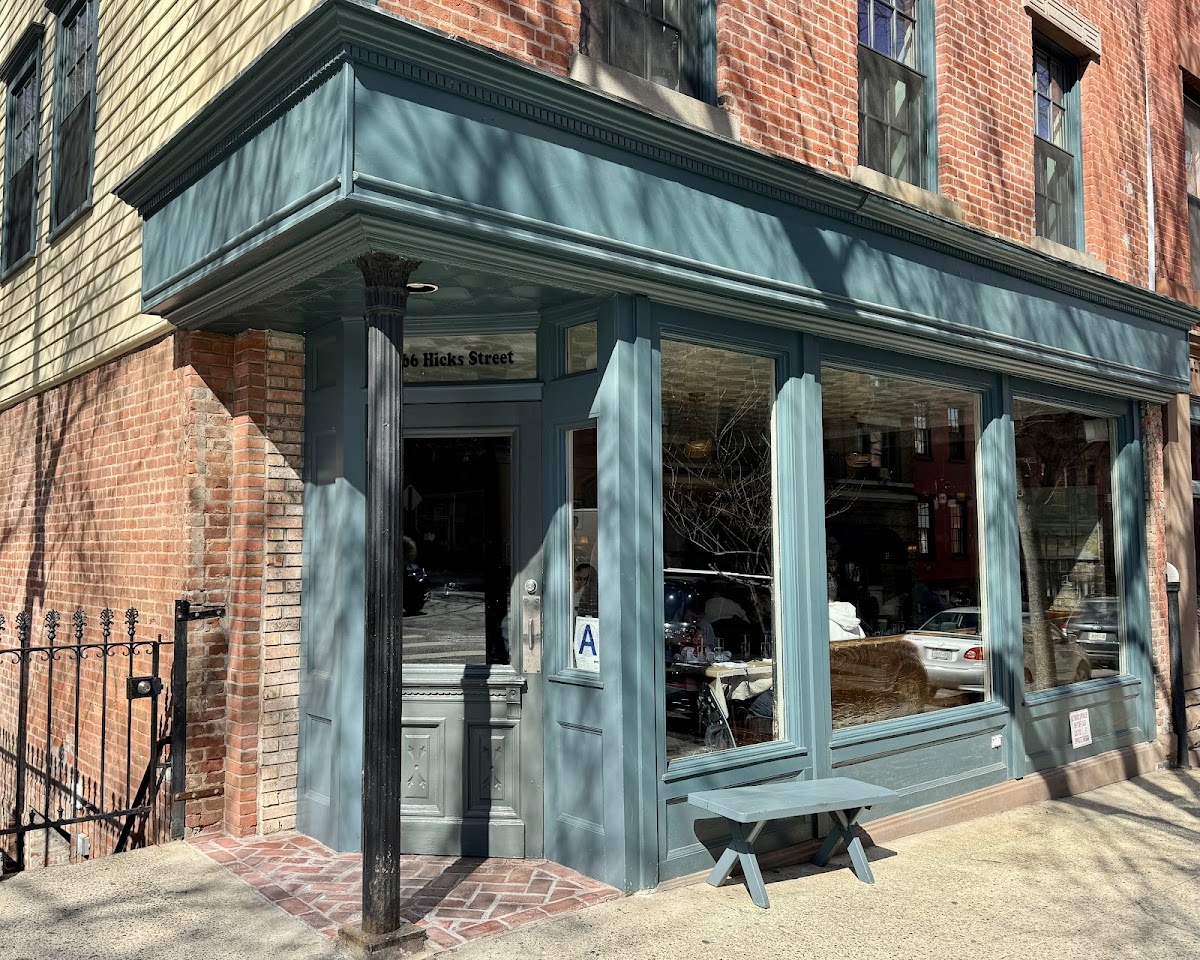
There's a particular kind of New York restaurant that achieves something harder than acclaim: invisibility to everyone except the people who live near it. Inga's Bar, occupying the corner of Cranberry and Hicks in Brooklyn Heights where Jack the Horse Tavern once anchored the neighborhood, has somehow managed this feat despite a James Beard nomination for chef Sean Rembold and a Resy staff pick that most restaurants would build a marketing campaign around. It remains the kind of place where you drop in on a Thursday night and recognize a familiar face—someone from your block, your gym, your favorite dry cleaner—and realize they're here for the same reason you are: because it's genuinely good and genuinely theirs.
Rembold and designer-partner Caron Callahan have engineered this feeling with precision. The room itself—tin ceiling, candlelit tables dressed in butcher paper, a glow that makes everyone look like the best version of themselves—invites lingering without demanding it. This is not a restaurant performing hospitality; it simply practices it. The menu rotates seasonally, which means regulars develop a particular hunger as seasons change. A Celery Victor salad arrives with the clean briskness of anchovy and Parmesan. Beer-braised pork shoulder comes with cannellini beans that have absorbed every ounce of the braise's richness. Agnolotti stuffed with butternut squash and hazelnuts taste like fall made edible.
But if Inga's has a reason people return weekly, it's the double-patty cheeseburger. This is not a chef's intellectual meditation on beef. This is a burger that knows exactly what it is: two thin patties, cheese, pickles, fries the color of old gold. It has developed a cult following that exists entirely within a six-block radius, which somehow makes it taste better. There's something about eating something this good while your neighbor eats it too, both of you understanding without speaking that this is the real New York, the one that doesn't end up in listicles.
Mortadella showered in grated brown butter arrives on a plate that begs you to order another round. The seasonal rotation means you might miss things—a dish you loved in October could be gone by November—but that's precisely the point. It's the menu of a restaurant not trying to be everything to everyone, but rather the exact restaurant its neighborhood needs right now.
Go on a weeknight and sit early; the corner draws its crowd, and they know what they're doing.