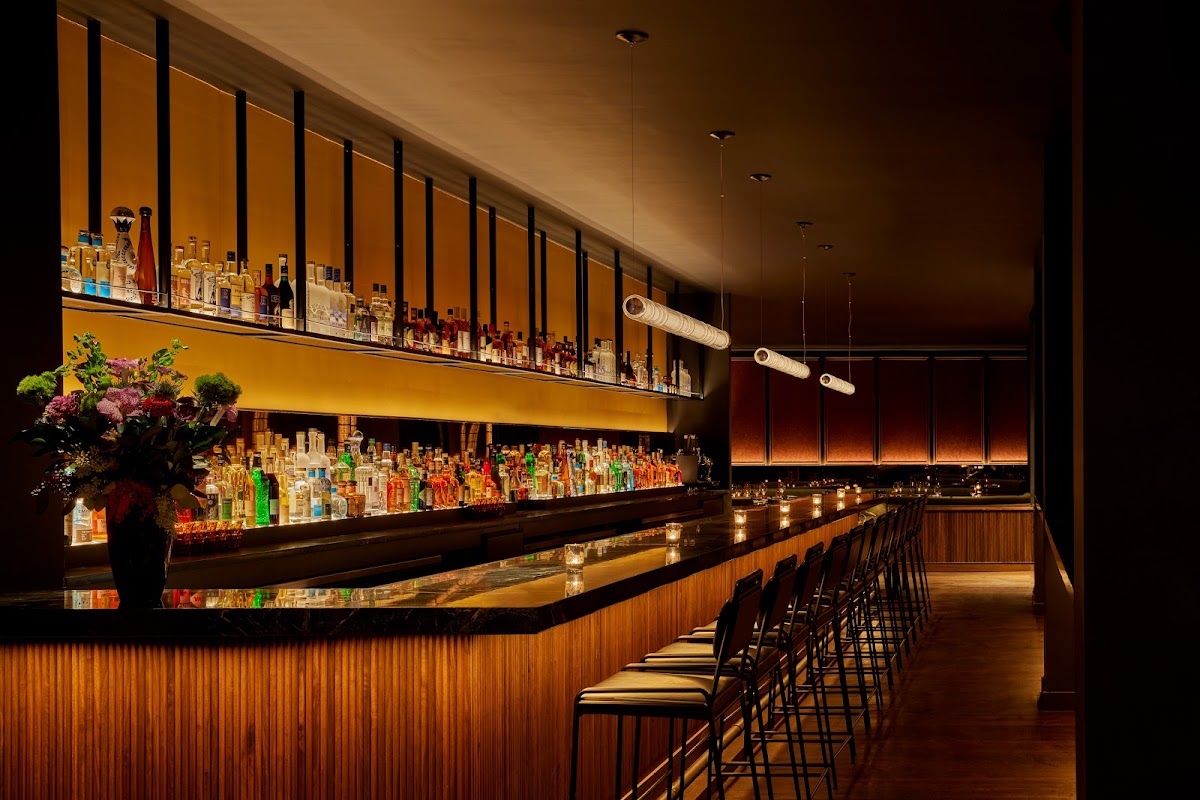
Coqodaq exists in a peculiar critical space. Pete Wells called it 'fine.' The Infatuation gave it an 8 and declared it 'an exhilarating way to celebrate the weekend.' Both are right, which is precisely the problem—and the point. The Korean fried chicken restaurant from the team behind Michelin-starred Cote has managed to create something that feels genuinely divisive in a food world increasingly obsessed with consensus.
Walking in, you understand the skepticism immediately. Drumsticks arrive in silver buckets. There's a $28 caviar nugget called the Golden Nugget, studded with 24-karat gold leaf. The dining room hums with the energy of a high-end nightclub, all candlelight and expensive leather and people very aware they're being seen. It reads, on first impression, like the kind of concept designed by committee—expensive, Instagram-friendly, and fundamentally unserious about the food.
But this is where Coqodaq's actual intelligence reveals itself. The fried chicken—available in Original or Gochujang Glaze versions—is legitimately good: crisp-skinned, properly seasoned, the kind of thing that justifies a special trip on its own merits. The banchan (Korean side dishes) are competent. The pre-set meal, called The Bucket List, keeps things straightforward. Yes, there's theatrical excess here, but the bones are solid.
The caveat is real, though: Pete Wells wasn't wrong about the salt and sugar. There's an aggressiveness to the seasoning that borders on one-dimensional. At around $70 per person for the full experience, you're paying for the theater—the silver buckets, the champagne pairings, the sensation of eating fancy fried chicken in what amounts to a poultry-themed lounge. Some diners will find that transaction worthwhile. Others will taste a restaurant trying too hard.
What matters is that Coqodaq exposes something true about New York's dining culture right now: the widening gap between old-guard critics prioritizing restraint and newer voices celebrating excess as legitimate fun. The restaurant isn't great. It's not bad. It's something more interesting—a genuine mirror of where we actually are, split down the middle, arguing about whether ambition and accessibility can coexist, or whether one always devours the other.