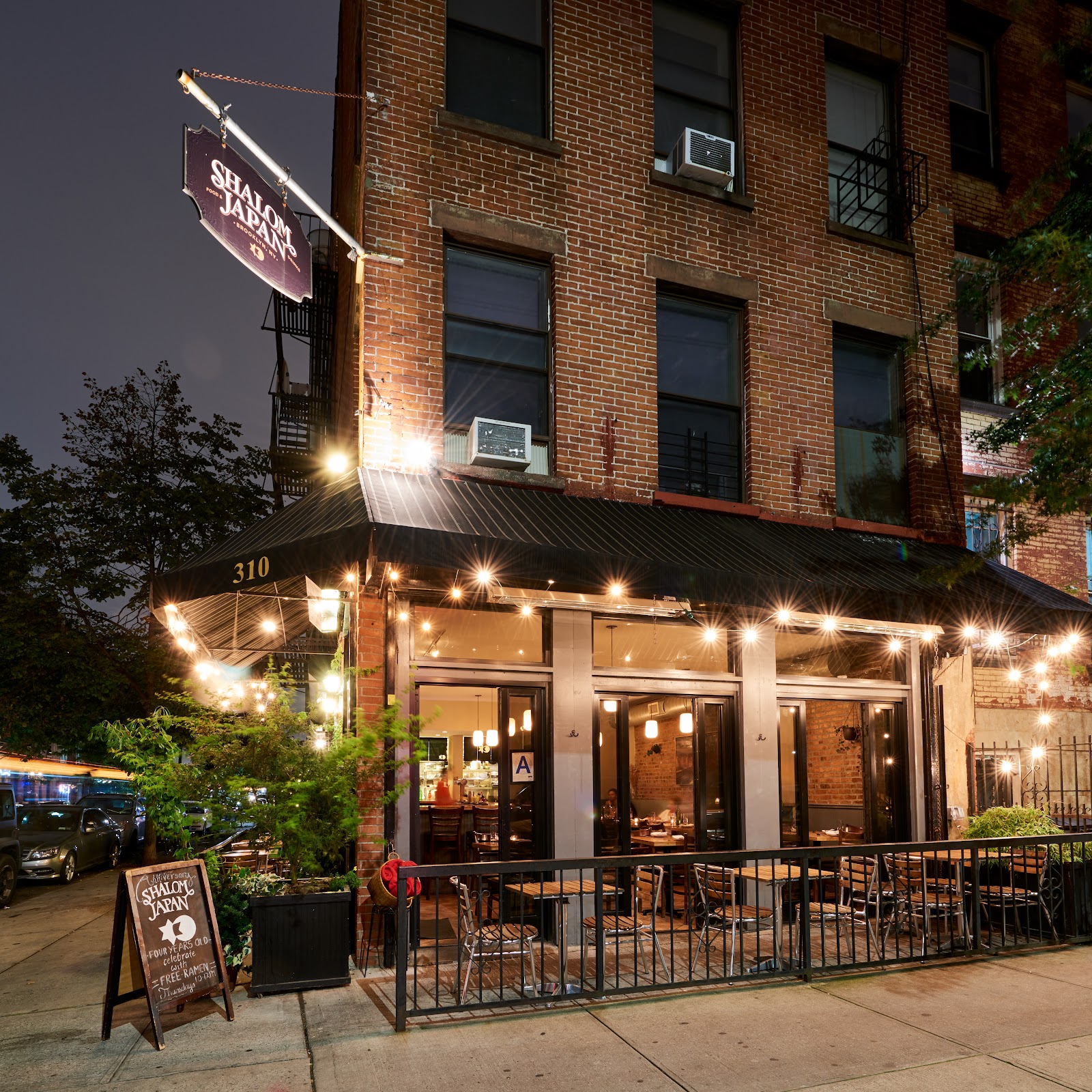
There's a particular kind of restaurant that feels less like a concept and more like an inevitability—a place where two traditions collide so naturally you wonder why they weren't always together. Shalom Japan is exactly that. When married chefs Aaron Israel and Sawako Okochi opened their South Williamsburg kitchen in 2013, they didn't set out to make a novelty act. Instead, they quietly built something serious: a restaurant where a bowl of matzoh ball ramen arrives with the same integrity as a lox-and-sushi-rice composition, where wagyu pastrami gets the umami-forward treatment it deserves, and where a chocolate-banana challah bread pudding tastes like it should have existed all along.
The menu reads with a wink, but the food never winks back. The matzoh ball ramen—chicken broth, char siu, scallion, nori, optional foie gras dumpling—is the dish that made the restaurant's name; it's now packaged as a kit and shipped nationwide, proof that some ideas are too good to stay confined to one brick-walled room. But that's not the whole story. The lox bowl, layered with avocado, Japanese pickles, ikura, and chili mayo over sushi rice, is the kind of hybrid that feels neither forced nor fashionable. It's just right. The wagyu pastrami sando, with only three components on the surface—house-cured meat, Gulden's mustard, shokupan—somehow contains multitudes. Michelin inspectors have recognized this seriousness twelve times over with Bib Gourmand honors.
Weekend brunch at Shalom Japan is where the restaurant's true purpose crystallizes. The okonomiyaki arrives topped with wagyu pastrami and sauerkraut, bonito flakes dancing over a runny egg. The sake kasu challah comes with golden raisin butter—refined comfort food that respects both its origins. There's a sake list that matters, cocktails that include Manischewitz without irony, and a brightness in the room that comes from natural light and genuine warmth. This is not a place built on novelty or provenance-dropping. It's built on the simple recognition that good food transcends borders, and that the overlap between Ashkenazi and Japanese cooking runs deeper than most people realize.
What makes Shalom Japan resonate now, after more than a decade, is its refusal to chase trends. While newer restaurants scramble to prove something, this one just keeps cooking—serving the same people who discovered it years ago, alongside newcomers still learning its worth. The menu isn't trying to surprise you with molecular gastronomy or exotic proteins. It's trying to feed you something true. That approach, executed with this level of skill and consistency, has become rarer in New York.
Go on a Saturday or Sunday morning, arrive early, and claim a seat near the window.