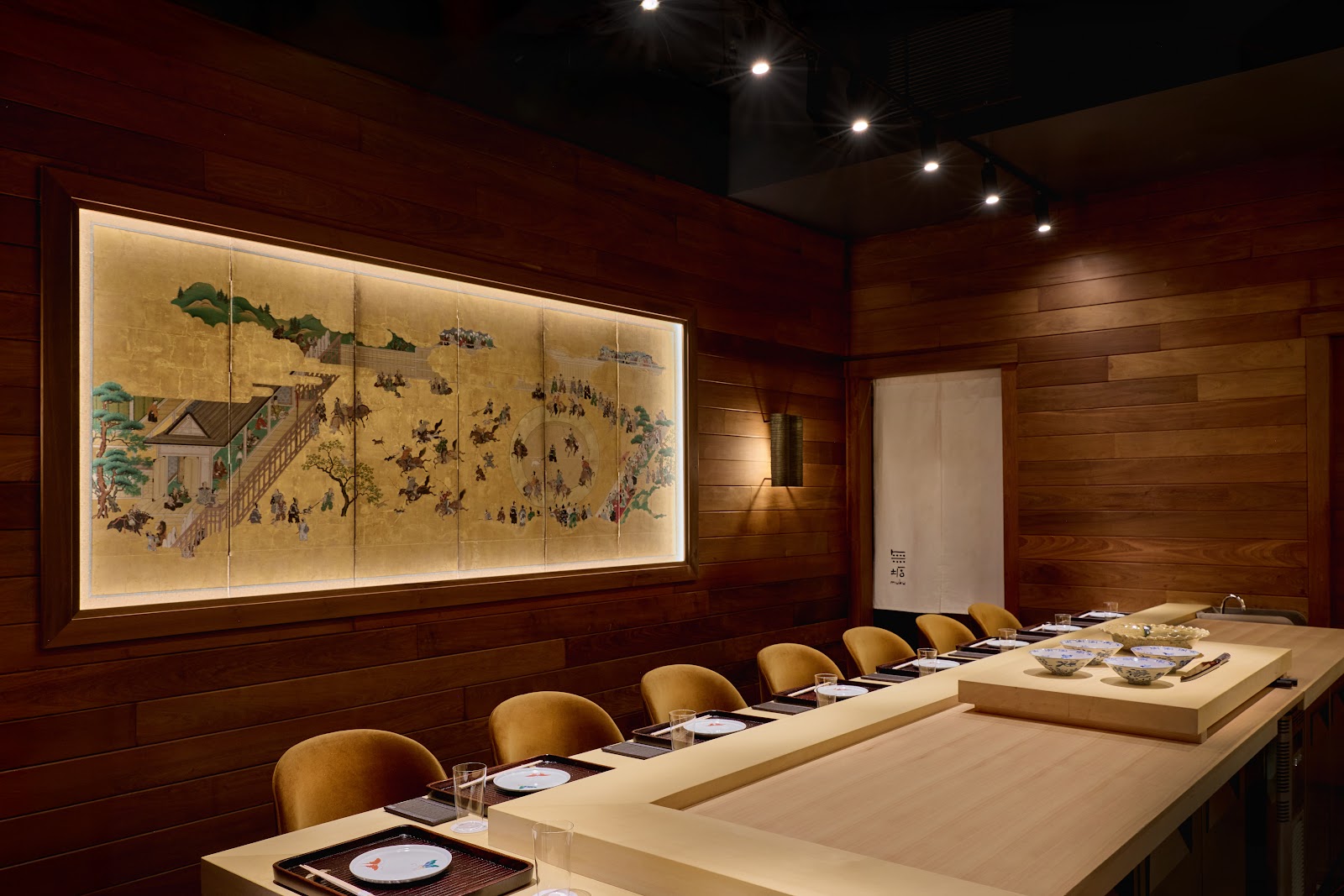
There's a particular kind of theater that happens when you sit alone at a ten-seat counter and watch a chef work three feet from your face. Muku, which opened in September at 412 Greenwich Street in the former Sushi Ichimura space, has made this theater the whole restaurant. Chef Manabu Asanuma earned a Michelin star in November—two months after opening, faster than any restaurant in New York history—and the accolade feels almost beside the point. The real accomplishment is that he's built a dining room where solitude isn't lonely; it's the most privileged seat in the house.
Asanuma trained under Iron Chef Koumei Nakamura and spent years in the restaurant that occupied this very space, which means he understands both technique and lineage. His food announces itself as nihonryori inspired by kaiseki but unburdened by its formal rules. The $295 tasting menu unfolds across ten to twelve courses organized around goho—the five classical Japanese cooking techniques: raw, grilled, simmered, steamed, and fried. This structure sounds pedantic on paper. In practice, it feels like watching someone think clearly. A king crab opening course gives way to foie gras chawanmushi, then hairy crab in shio-koji tomato soup with caviar. A5 wagyu arrives tableside in a personal shabu shabu setup. Handmade Yamagata soba arrives warm and precise. Nothing announces itself. Everything speaks.
Michelin's notes about seating are worth reading closely: solo diners are purposefully centered directly in front of the chef, for an unobstructed view of every knife stroke. This isn't damage control. This is intention. "The counter is the only option—and that's the beauty of it," Asanuma has said. "You're close enough to see every knife stroke while still being able to have an intimate conversation." That last phrase matters. Intimacy at Muku isn't about whispered secrets; it's about proximity to skill, to intention, to the moment something becomes food.
What distinguishes Asanuma's work is what he removes rather than what he adds. "I focus on subtraction," he explains, "removing excess so that the true flavor and intention of each ingredient can be clearly felt." This is harder than it sounds. Easy cooking hides behind salt and fire and technique. This cooking stands naked. The approximately ten-seat Tribeca counter feels almost impossibly new, yet it already carries the calm of a much older place—the kind of calm that comes from knowing exactly what matters and refusing everything else.
If you're serious about getting a seat, call ahead and ask about weeknight availability, when the room tends to open up.