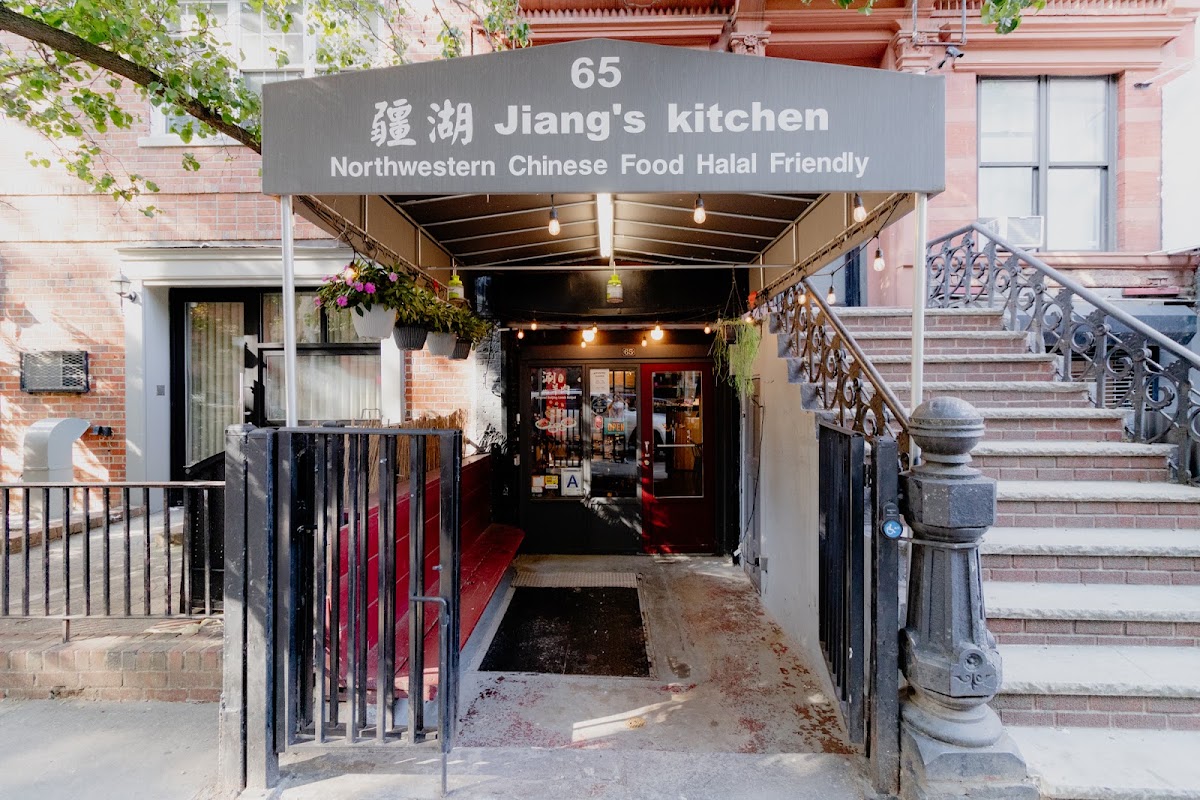
When Jiang's Kitchen opened at the tail end of 2021 on St. Marks Place, it arrived without fanfare from the usual critical channels. No Times review. No Eater splashy feature. Instead, the restaurant built its reputation the old-fashioned way—word of mouth, TikTok creators within the halal-eating community, and the simple fact that it does something few Manhattan restaurants bother to attempt: it serves halal-certified Xinjiang cuisine, the cumin-heavy, meat-forward tradition of China's northwestern frontier, where Uyghur and Inner Mongolian influences run deep through every dish.
The menu reads like a playlist of proper Xinjiang hits. Hand-pulled noodles arrive buried under Xinjiang Big Plate Chicken, a braise of dark meat and potato that tastes of star anise and accumulated spice. BBQ lamb ribs come charred and crusted with cumin—the spice that governs this kitchen's entire worldview. Beef wontons swim in sour soup with a vinegar bite that cuts through richness. The baked lamb bun, a stuffed flatbread, carries lamb that's been properly seasoned rather than timidly compromised. Even the hot and sour cucumbers taste like they came from someone's afternoon prep, not a jar. Portions are generous without being wasteful, and prices sit in the zone where you can order multiple dishes and still leave money in your pocket.
What makes Jiang's Kitchen matter isn't just that it exists, but that it exists at all in this city's fractured, neighborhood-by-neighborhood dining landscape. Halal-friendly Chinese restaurants remain nearly extinct in Manhattan, a gap that feels particularly stark given the size of the Muslim community in New York and the tradition of Chinese food as a democratizing constant in the city's food life. Jiang's proves these worlds don't have to exist separately—that you can want authentic regional Chinese food and halal-certified proteins simultaneously, and someone should feed you without making it feel like an accommodation rather than an offering.
The hand-pulled noodles are what the devoted return for. They have the right chew, the slight irregularity that signals they weren't cut by a machine, and they land in broth or under braise with the kind of conviction that makes a bowl feel necessary rather than optional. This is basic technique, executed well, which in the context of New York's restaurant landscape has become unexpectedly rare.
The BYO policy—no alcohol sold—adds to the place's unpretentious feel. It's a neighborhood spot designed for regulars, not a theater for performance. Go on a weeknight, when you're most likely to find a table without waiting, and order more than you think you need. The restaurant has found its people. Joining them isn't difficult.