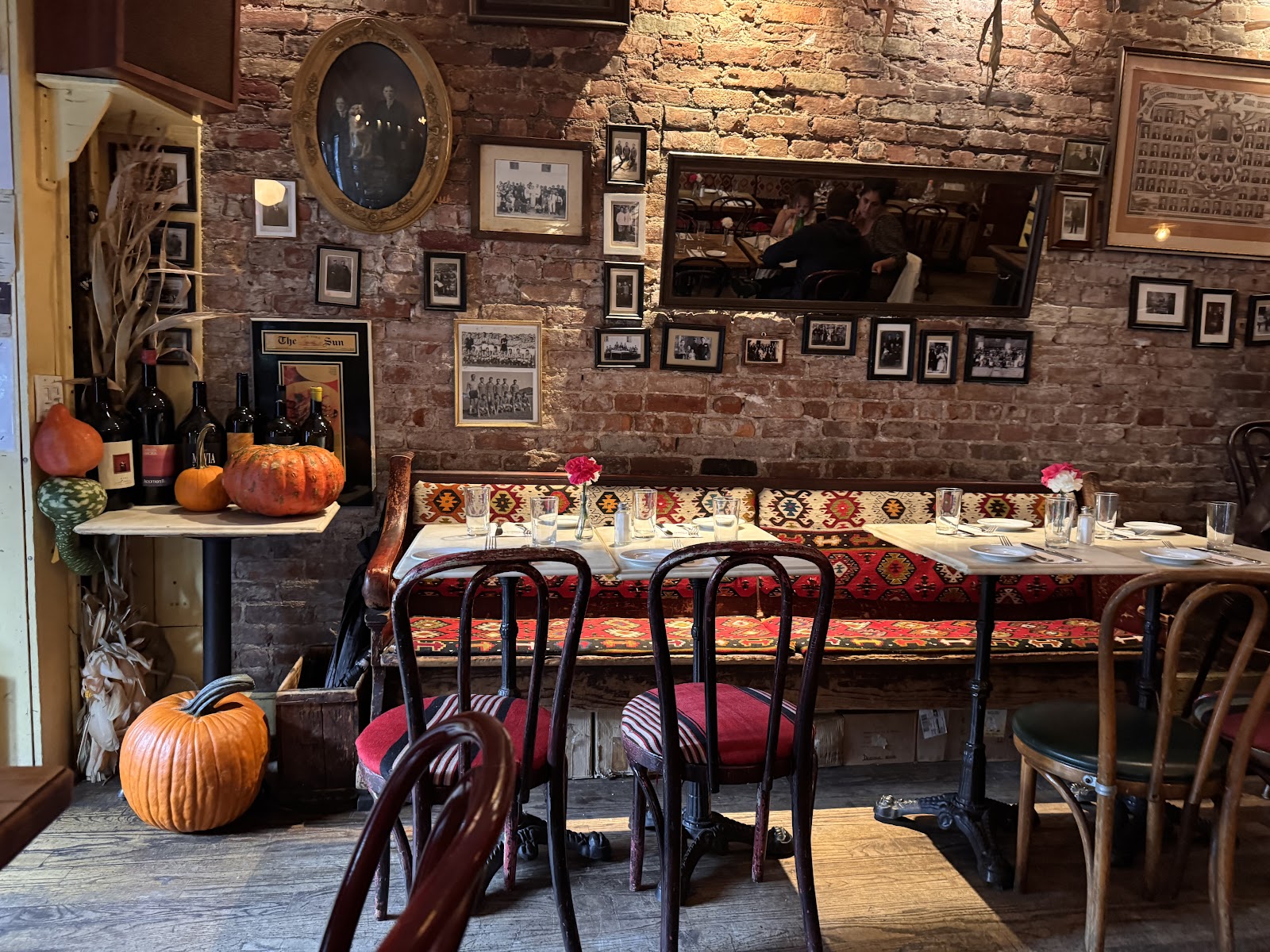
There's a particular magic in stumbling into a restaurant that feels less like a destination and more like an open door into someone else's world. Kafana, the narrow, brick-walled Serbian bistro anchoring Avenue C since 2008, possesses it entirely. Walk in and you're not checking Instagram or thinking about the chef's résumé; you're thinking about whether the candlelight is actually flattering your date, and whether that couple two tables over speaking rapid Serbo-Croatian might invite you to their table.
The room itself is the real draw—a study in studied un-self-consciousness. Black-and-white postcards and Yugoslav memorabilia paper the walls like a beloved aunt's living room; the brick glows in low light; the staff moves with the easy rhythm of people who've been doing this long enough to know exactly when you need water and when you need to be left alone. This is what a supper club feels like in Belgrade, minus the performative coolness that would spoil it entirely.
The food is straightforward: grilled meats that taste like meat, ćevapi with its proper char, pljeskavica stuffed with cheese that splits when you bite into it, lamb shanks that have earned their tenderness through time. Gibanica arrives golden and phyllo-crisp, cheese oozing at the edges. Walnut-and-cheese-stuffed prunes wrapped in bacon shouldn't work as well as they do. Everything lands under $30 a dish—a full feast for two is indulgence without the accompanying financial dread.
But the wine list is what separates Kafana from every other neighborhood spot trading in nostalgia. This is Serbian, Croatian, and Slovenian bottles—wines you cannot find anywhere else in New York, poured by people who actually know them. Most bottles run under $55. The list alone is a reason to show up.
Cash only. No reservations. Character-full staff who will make you feel less like a customer and more like you've stumbled into a place that's been waiting for you. Go on a weeknight, arrive early, and order something you can't pronounce. The point is the room, the wine, the company, and the knowledge that some places in New York still feel like they belong to their neighborhood rather than to Instagram.