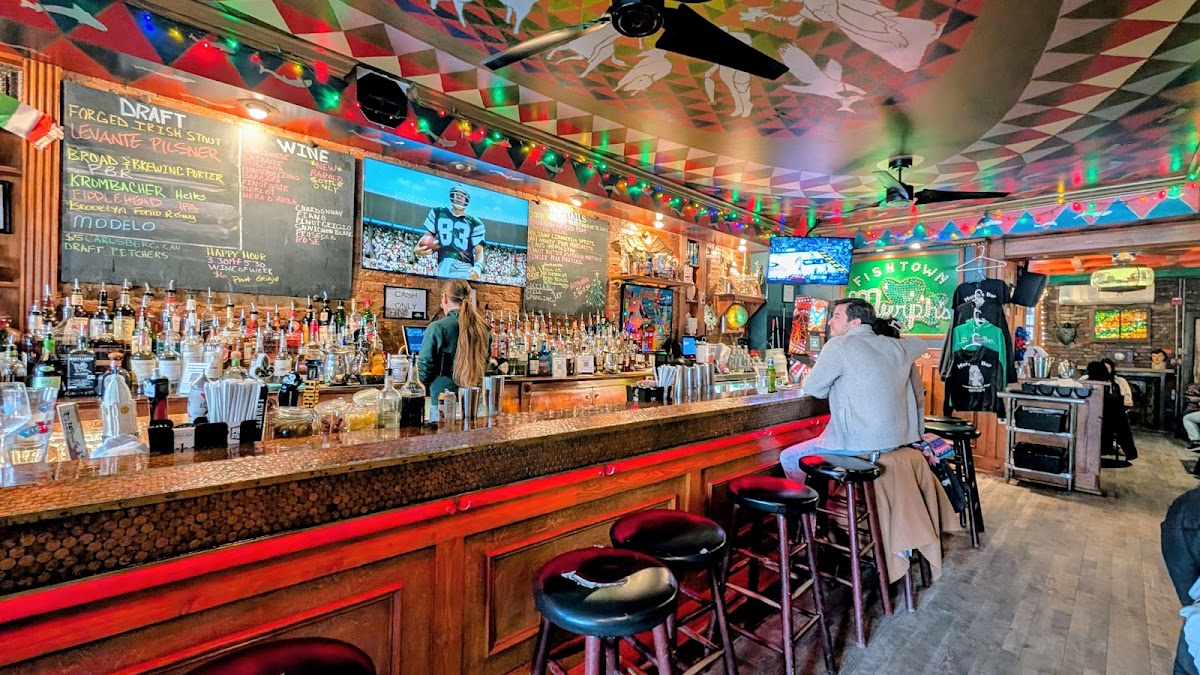
Francesco Bellastelli walked into Murph's Bar looking for a meal and found none. So he stayed. The chef from Taranto, a naval town on the heel of Puglia's boot, approached the Irish pub's owners with a proposition: rent him the kitchen, keep the bar, and let him cook what he knows. They agreed to an arrangement as unconventional as the food that emerged from it.
What unfolds in that basement kitchen defies the dim lighting and Elvis busts upstairs. Bellastelli crafts pasta and sauces with the precision you'd expect from a four-star kitchen, working in a space where food and drink operate on entirely separate economies—cash only for the kitchen, a different transaction for your Guinness. It's a setup that feels almost accidental, born from hunger and pragmatism, yet it produces tagliatelle Bolognese that tastes like it traveled from Bologna yesterday and fried burrata that shouldn't exist in a room lined with sports memorabilia.
The genius of Murph's is that it refuses to perform. There's no Instagrammable reveal, no chef's counter, no premium on the room itself. You squeeze into one of eighteen seats, order your food in cash, and eat Italian food that matters from a bar that looks like it never changed. Bellastelli's pear and cheese fiocchi, his lobster ravioli, his stuffed zucchini flowers—these aren't gestures toward Italian cooking. They're the thing itself, executed with the kind of precision that comes from understanding a cuisine from the inside out.
This is what happens when circumstance, skill, and stubbornness collide in a Fishtown basement. Murph's isn't a restaurant pretending to be a bar or a bar trying to do food. It's a place where an Italian chef needed a kitchen and a bar needed a reason to fill those eighteen seats. The fact that what emerged is genuinely excellent is almost beside the point—though it's not beside the point at all.