There's a particular kind of magic that happens when a chef with serious credentials decides to stop showing off. Hiroki Odo, who earned two Michelin stars at his fine-dining flagship, has opened Odo East Village as what he calls a 'kaiseki-izakaya'—a concept that didn't exist in Manhattan until February 2025. The distinction matters: instead of the ceremonial silence and rigid progression of formal kaiseki, you're working à la carte, ordering what calls to you, leaning on the bar, and talking between bites. It's the younger, looser sibling to his tasting-menu restaurant, and it's thrilling precisely because Odo isn't holding back the technique. He's just holding back the pretense.
The 14-seat counter wraps around an open kitchen where chefs work over binchotan charcoal—which means every seat is the best seat, but also that there are only 14 of them. This is not a problem if you're dining alone. The Infatuation noted that solo diners have the easiest time landing a walk-in spot, and frankly, the counter is built for you: there's nothing awkward about being the person at the bar with a glass of sake and a singular, intense focus on what's in front of you. A full dinner—the kind where you move through hamachi collar grilled over charcoal, chawanmushi with uni and ikura, braised wagyu beef tongue darkened with red miso, and the day's kamameshi—lands around $100 with a drink. That's a steal for this caliber of cooking.
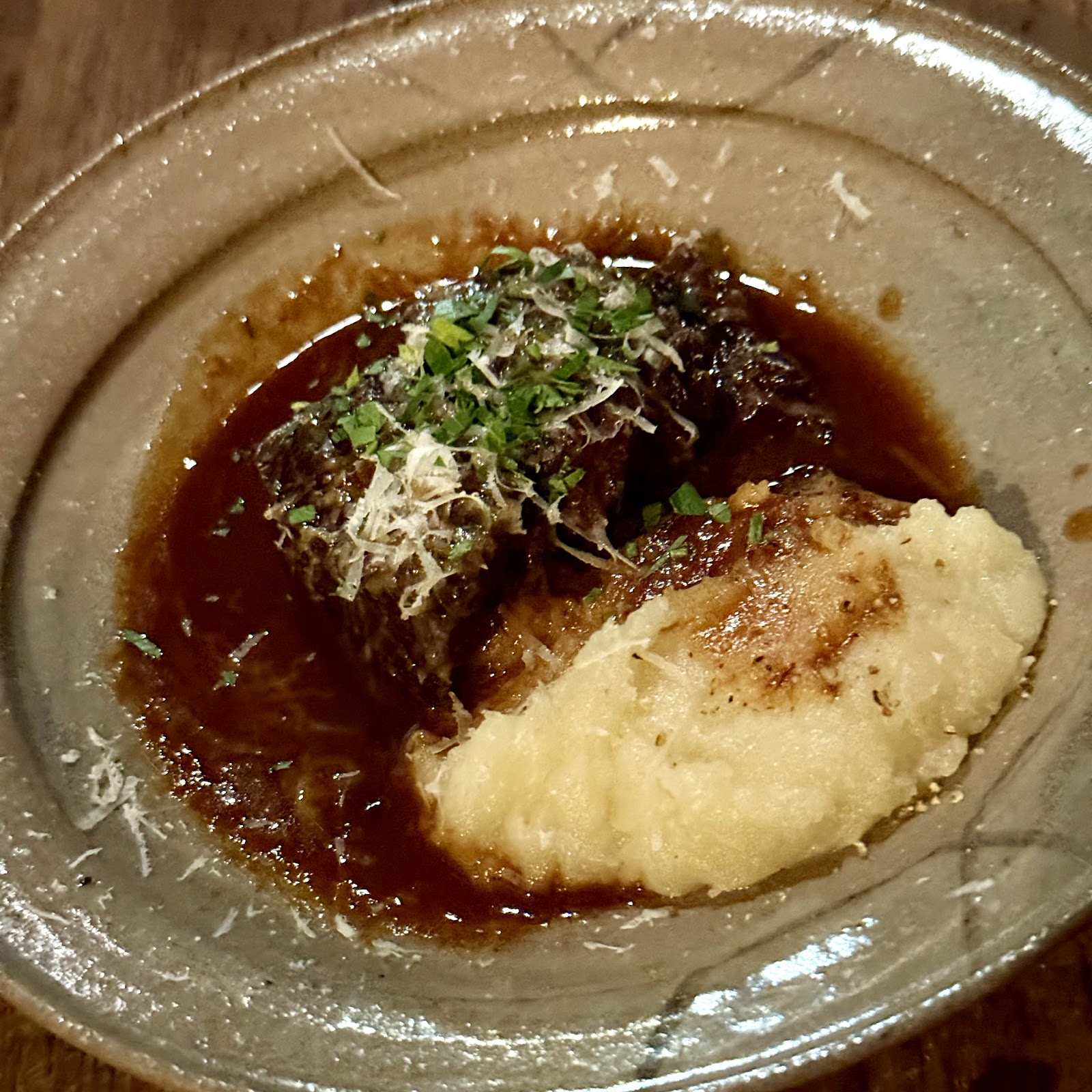
The menu is gluten-free and rice-forward, structured around what's in season. The braised wagyu beef tongue arrives in a deep red wine and miso reduction with potato purée—the kind of dish that tastes like it took hours but lands with the ease of something simple. The chawanmushi trembles gently, its delicate eggs studded with Santa Barbara uni and Hokkaido ikura that pop. The sashimi course (otsukuri) shows off the obvious—akami and chutoro cut to exact thickness—but in a room this small, obvious never feels like enough. There's a seasonal kamameshi served in iron, finished either as ochazuke (poured over with warm broth) or pressed into yaki-onigiri, depending on your mood and appetite.
What makes Odo East Village matter right now isn't novelty for its own sake. It's that Odo has created something that shouldn't work on paper—fine-dining precision in an izakaya format, at prices that don't punish you, in a room so small that the kitchen's focus becomes contagious. You're not being performed at. You're being cooked for. The buzzy after-hours energy The Infatuation described is real: couples who arrive together stop speaking when the food hits, solo diners look like they're having religious experiences on bar stools, and the whole room moves at a tempo that feels natural instead of orchestrated.
Go on a weeknight early, when walk-in seats are most likely to open up. You won't need a reservation; you'll just need to show up and be willing to eat at the counter.