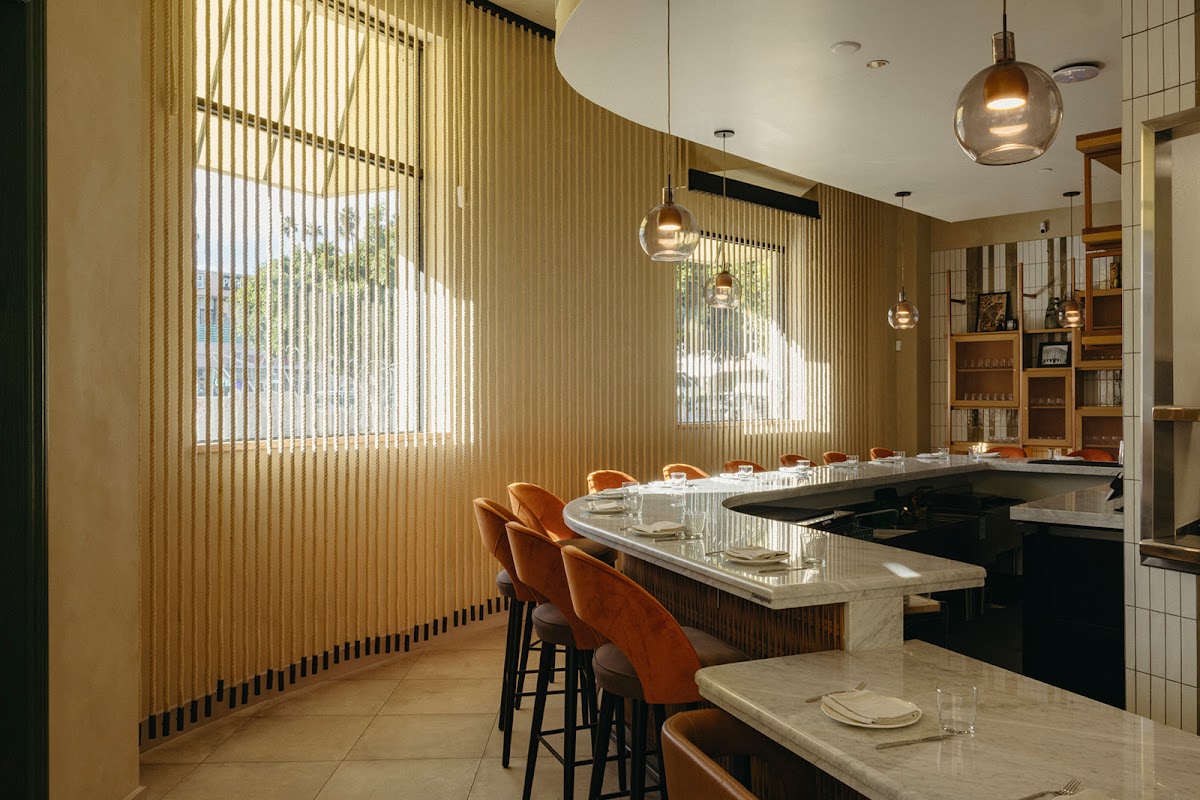
There's a particular kind of ambition on display at Lapaba, which opened its doors in early February in Los Angeles. It's the ambition to not phone it in. When chefs McKenna Lelah and Matthew Kim—who met years ago at Osteria Mozza while working under Silverton—decided to build a restaurant around Italian-Korean fusion pasta, they didn't reach for the easy shortcuts. No gochujang dumped into a cream sauce for credibility. No Korean ingredients treated as exotic garnish. Instead, they've built something that demands respect for both cuisines, which turns out to be harder and more interesting work.
The backbone of Lapaba is fresh pasta made daily in a dedicated pasta room, and this detail matters. It signals that the cooking here is grounded in the technical rigor of Italian pasta craft—the hydration, the lamination, the shape-to-sauce relationship. But then comes the pivot. A bucatini arrives dressed in a black-bean jjajang Amatriciana, a dish that understands how umami-forward Korean fermented flavors can actually complement, rather than compete with, the salt-pork foundation of the original. Agnolotti riffing on Korean corn cheese. Orecchiette with gochugaru-flecked fennel sausage. These aren't translations or compromises; they're informed decisions about which flavors belong together.
The menu's most ingenious move may be the cacio e pepe-inspired tteokbokki, which swaps wheat pasta for in-house tteok—those chewy Korean rice cakes—and lets the creamy, peppery sauce do the work. It's a dish that acknowledges the obvious connection between Italian and Korean cooking (both lean on technique, texture, bold seasonings) while refusing to erase what makes each tradition distinct. Kim and Lelah understand that Korean food carries an inherent sweetness that clashes directly with the umami-forward expectations of Italian pasta. Rather than ignore this, they've engineered around it.
Small shareable portions encourage grazing, which is exactly the right call for a restaurant built on curiosity. You want to taste the squid-ink calamarata with clams alongside the corn cheese agnolotti, to understand how these chefs are thinking about balance across the menu. This is Silverton's model applied with fresh eyes—the carefully edited menu, the focus on craft and ingredient quality, the sense that every dish has been fought over in the kitchen until it arrived at something honest.
Lapaba matters right now because it proves that fusion, when executed with genuine technical skill and respect for both traditions, isn't a shortcut. It's just harder cooking. The restaurant opened after limited service in late January, but it's worth seeking out now that it's in full swing. This is what happens when two chefs who've learned Italian pasta from the ground up decide to ask what that craft looks like when built on a different set of assumptions.