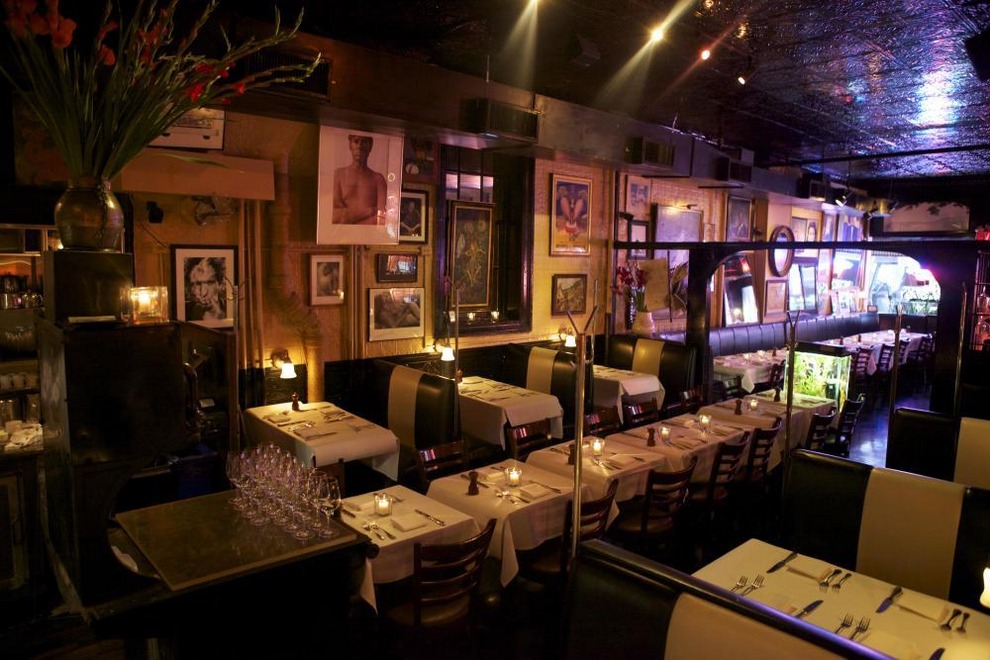
There are restaurants that age into stuffiness, and then there is Raoul's. The SoHo institution that Serge and Guy Raoul opened in 1975 has managed the nearly impossible feat of becoming more essential as it has aged, shedding none of its electricity in the process. Walk in on any given night and you'll find the red banquettes full, the bar three-deep, the open kitchen throwing heat and noise into a dining room where the art on the walls has been accumulating longer than most New York relationships last. This is what bohemian actually looks like when you stop performing it.
The menu reads as straightforward French bistro—steak au poivre with duck fat fries, pan-seared foie gras with pickled red onions, Dover sole—but the real draw has always been atmosphere. The candlelight is real. The mirrors are framed. The noise level suggests something is actually at stake. You can feel the difference between a room designed to be romantic and one that simply became romantic by accident, through the accumulation of significant moments and the kind of genuine downtown energy that can't be purchased or manufactured. Raoul's is the latter.
Then there is the burger. Twelve are made per night, available only at the bar, and the scarcity is not a gimmick—it's operational reality. The Burger au Poivre arrives as a small rebellion against the restaurant's own elegance: a properly constructed thing with duck fat fries that taste like they were cooked in actual fat and not nostalgia. There is no reserving it. There is no guarantee. This built-in sense of stakes, of maybe getting what you want and maybe not, is what formal tasting menus have been trying to manufacture for years without success. Raoul's never had to try.
The restaurant's fiftieth anniversary, celebrated with a Tribeca Festival documentary premiere, should have felt like a funeral for something. Instead it reads as confirmation: this place is in its golden age. Not because the food has gotten better—it has remained reliably excellent and unselfconscious—but because the city around it has become increasingly designed and smoothed over. Raoul's stands as evidence that New York's scrappier downtown DNA still exists, even if only in certain rooms, on certain nights, if you know where to look.
If you want to experience what people mean when they talk about New York romance, you need to go. Go on a weeknight if you want relative quiet; go on a weekend if you want to feel the full charge of the room. Either way, arrive early enough to claim a spot at the bar and position yourself for the burger lottery. The odds are not in your favor. That's exactly the point.