Walk into Rubirosa on any night and you'll understand why Nolita still feels like Nolita. The narrow, railroad-style dining room on Mulberry Street is packed shoulder-to-shoulder with the people who actually live here, mixed in with the pre-gamers heading downtown and the visitors who've somehow stumbled onto something real. Since opening in 2009, A.J. Pappalardo has built a restaurant that doesn't apologize for its lineage—his family's pizza roots run back to the legendary Joe & Pat's on Staten Island—and doesn't need to chase trends because it's become the trend.
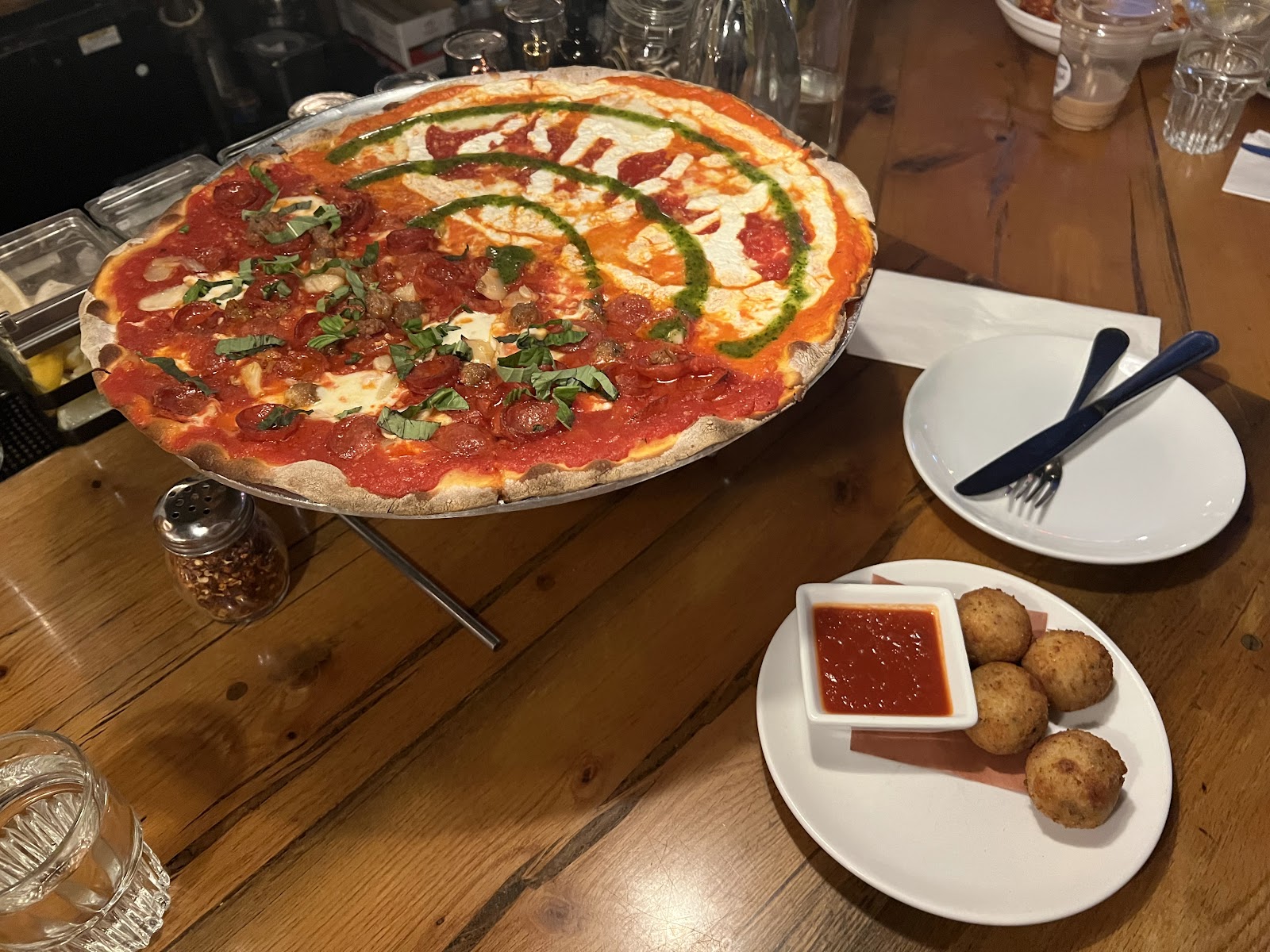
The Tie Dye™ pizza is, by now, shorthand for the entire block. That vodka sauce, tomato, and pesto swirl topped with fresh mozzarella has earned itself a trademark and a bottled sauce line, which says something about New York's appetite for what it does. But here's what matters: the pizza is genuinely good. It's not an Instagram prop. The balance between the slight boozy richness of vodka sauce and the bright jump of basil actually works, and the crust has the kind of structural integrity that lets you eat it without it folding into nothing. Order it. It's worth the hype. But don't stop there.
Rubirosa's real secret is the pasta. This is where the kitchen quietly demonstrates that it's cooking at a level most places don't bother reaching. The carbonara arrives with fat chunks of pancetta and a sauce that's velvety without being heavy—the kind of dish that makes you understand why Italian-American red-sauce tradition still matters. The cavatelli with broccoli rabe and sausage has the textural contrast and seasoning clarity that separates competent cooking from the kind that makes regulars come back every week. Monday lasagna is the kind of special that builds mythology around a restaurant, and deservedly so.
What Rubirosa has managed to do is impossible in most of New York now: it bridges the gap between the old-world Italian-American joints your grandparents knew and the energy that downtown needs to survive. It's family-run, it's rooted in actual pizza lineage, and it refuses to become precious about any of it. The scene is chaotic and alive in a way that feels increasingly rare. You're eating alongside people who live on the block, people celebrating something, people passing through. There's no velvet rope, no reservation game, no sense that you don't belong.
The food is the point, but the fact that it's good enough to make a room this crowded feel necessary rather than annoying—that's the real achievement. Rubirosa didn't invent Nolita's casual-cool dining identity, but it's become the standard by which everything else on the block gets measured. It deserves that position.